Introduction
The rapid development of artificial intelligence has created an enormous demand for faster, smarter, and more energy-efficient computing technologies. Traditional computer processors have delivered remarkable performance improvements, but they face growing challenges when handling complex AI workloads. As researchers search for alternatives, a revolutionary approach known as neuromorphic computing is attracting significant attention.
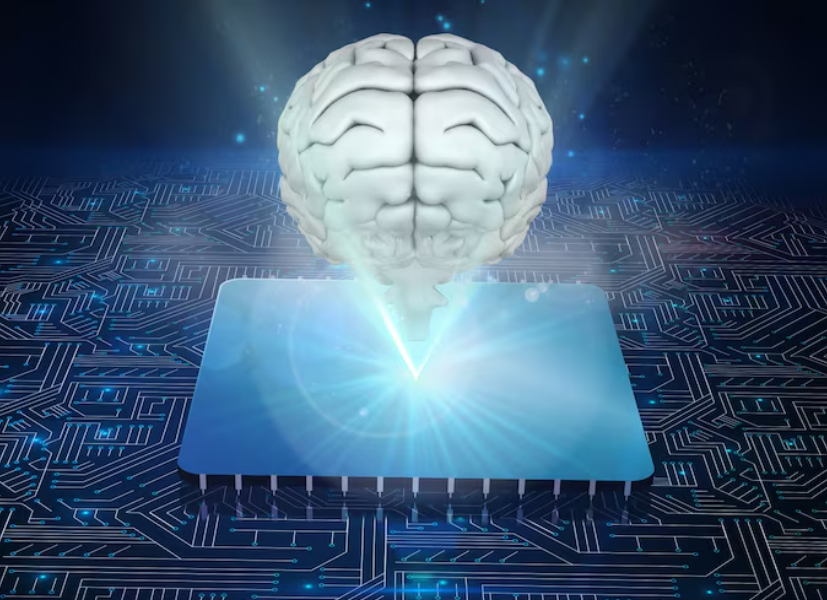
Neuromorphic chips are designed to imitate certain structural and functional principles of the human brain. Instead of relying entirely on conventional computing architectures, these processors use interconnected artificial neurons and synapses to process information in new ways.
This brain-inspired technology has the potential to transform robotics, healthcare, autonomous vehicles, intelligent sensors, and future AI applications.
What Are Neuromorphic Chips?
Neuromorphic chips are specialized processors that reproduce selected characteristics of biological neural networks. Their architecture draws inspiration from how neurons communicate through electrical signals and how synapses influence connections between neurons.
Traditional computers generally separate memory and processing functions. Information frequently moves between these components, consuming energy and creating performance limitations.
Neuromorphic systems take a different approach by placing computation and memory-related functions closer together, allowing information to be processed through networks of artificial neurons.
Many neuromorphic processors use spiking neural networks (SNNs), where neurons communicate using discrete electrical events called spikes.
These systems can remain relatively inactive until meaningful information arrives, potentially reducing unnecessary computations and energy consumption.
How Neuromorphic Computing Mimics the Human Brain
The human brain is an extraordinary biological processing system capable of learning, recognizing patterns, interpreting sensory information, and making decisions while consuming comparatively little energy.
Neuromorphic engineering attempts to capture some of these computational advantages through specialized electronic architectures.
1. Artificial Neurons and Synapses
Biological neurons transmit information through electrical impulses, while synapses regulate communication between connected neurons.
Neuromorphic chips replicate simplified versions of these mechanisms using electronic circuits and computational models.
Artificial neurons receive signals, integrate information, and generate spikes when certain conditions are met.
2. Event-Driven Processing
Traditional processors often perform operations according to clock-driven instructions, even when incoming information changes very little.
Many neuromorphic systems operate using event-driven processing, activating specific components when relevant signals occur.
This approach can reduce unnecessary activity and improve energy efficiency, particularly in sparse sensory workloads.
3. Parallel Information Processing
The brain processes enormous amounts of information through interconnected networks operating simultaneously.
Neuromorphic processors similarly support highly parallel computation, allowing numerous artificial neurons to exchange information across a distributed architecture.
This can benefit applications requiring rapid responses to complex sensory inputs.
4. Learning and Adaptation
Some neuromorphic systems support learning mechanisms inspired by biological synaptic plasticity.
For example, spike-timing-dependent plasticity adjusts connection strengths according to the timing of neural activity.
Such mechanisms may allow certain systems to adapt to changing environments, although learning capabilities depend heavily on individual chip designs.
Why Neuromorphic Chips Matter for Artificial Intelligence
Modern AI systems often require substantial computational resources, especially when training and operating large neural networks.
Neuromorphic computing offers an alternative approach for selected AI tasks.
One of its most promising advantages is the possibility of achieving useful computational performance with significantly lower energy consumption.
For applications involving continuous monitoring, sensory recognition, or real-time responses, event-driven neural processing can be particularly attractive.
Neuromorphic hardware also provides opportunities to explore AI systems that process information continuously rather than relying exclusively on conventional deep-learning architectures.
However, neuromorphic chips are not universal replacements for GPUs or CPUs. Their advantages are most evident in workloads that suit their specialized architectures.
Major Benefits of Neuromorphic Technology
Improved Energy Efficiency
Energy consumption is a major concern in modern computing. Large data centers, AI accelerators, and connected devices require increasing amounts of electricity.
Neuromorphic processors can reduce energy use for certain tasks by activating computational resources only when relevant events occur.
This makes them promising candidates for battery-powered devices and systems operating under strict energy constraints.
Faster Responses to Sensory Events
Applications such as robotics and autonomous navigation require computers to interpret changing environments quickly.
Neuromorphic chips can process incoming events with low latency, helping compatible systems react rapidly to movement, sound, or other sensory information.
Efficient Edge Computing
Edge computing involves processing information near the source instead of transmitting everything to distant cloud servers.
Neuromorphic chips could enable smarter edge devices that perform local analysis while consuming limited power.
This is particularly useful for wearable electronics, industrial sensors, and remote monitoring equipment.
Adaptive Computing Capabilities
Certain neuromorphic architectures support local learning and adaptive behavior.
These capabilities may help future intelligent machines respond to unfamiliar situations without requiring constant centralized processing.
Real-World Applications of Neuromorphic Chips
Robotics and autonomous machines
Robots must continuously interpret visual, auditory, and environmental signals. Neuromorphic processors may help robots navigate changing environments, recognize obstacles, and respond efficiently to sensory events.
Healthcare and medical technology
Brain-inspired processors could support wearable health monitors, neural interfaces, and intelligent medical sensors.
Their low-power potential makes them especially interesting for devices that need to operate continuously with limited battery capacity.
Autonomous vehicles
Self-driving technologies require fast interpretation of surrounding conditions.
Neuromorphic hardware, particularly when paired with event-based cameras, could assist with motion detection and rapid environmental awareness. Extensive validation would still be required before relying on such systems for safety-critical driving decisions.
Industrial automation
Factories increasingly use intelligent sensors to identify equipment problems and monitor production.
Neuromorphic processors may support energy-efficient anomaly detection, predictive maintenance, and real-time monitoring in industrial environments.
Smart consumer electronics
Future headphones, wearables, smart-home devices, and portable electronics may benefit from neuromorphic computing.
Local sound recognition, gesture detection, and environmental sensing are examples of tasks that could use low-power event-driven processing.
Leading Developments in Neuromorphic Hardware
Several major technology companies and research institutions have contributed to advancing brain-inspired computing.
Intel’s Loihi research processors explore spiking neural networks, programmable learning mechanisms, and energy-efficient neuromorphic architectures. The Loihi 2 platform represents an important step in developing more capable experimental neuromorphic systems.
IBM’s TrueNorth chip demonstrated how large networks of artificial spiking neurons could be implemented in specialized hardware with an emphasis on low-power operation.
Academic projects such as SpiNNaker, developed at the University of Manchester, have also helped researchers study large-scale neural simulations and brain-inspired computation.
These initiatives demonstrate substantial progress, although widespread commercial adoption remains limited compared with conventional processor technologies.
Challenges Facing the Neuromorphic Chip Revolution
Despite its potential, neuromorphic computing faces important technical and practical challenges.
One major obstacle is software compatibility. Most existing AI frameworks and applications are optimized for conventional processors and GPUs.
Building software that efficiently uses spiking neural networks often requires specialized tools, models, and programming techniques.
Another challenge involves training. Conventional deep-learning methods are highly developed, while effective training techniques for many spiking neural networks remain an active research area.
Manufacturing costs, hardware availability, limited standardization, and the difficulty of comparing performance across different architectures also complicate broader adoption.
Furthermore, although neuromorphic chips can provide significant efficiency advantages in specific situations, these improvements are not guaranteed across every computing task.
Neuromorphic Chips vs. Traditional Processors
| Feature | Traditional Processors | Neuromorphic Chips |
|---|---|---|
| Architecture | General-purpose or conventional parallel computing | Brain-inspired neural architecture |
| Processing style | Primarily instruction-driven | Often event-driven and spike-based |
| Memory organization | Frequently separated from computation | Can distribute memory near computation |
| Energy efficiency | Depends on workload and processor | Potentially high for suitable sparse workloads |
| Learning | Usually software-implemented | Some support local neural learning |
| Applications | General computing and mainstream AI | Sensory processing, robotics, and research |
The comparison highlights why neuromorphic computing is better understood as a complementary technology rather than an immediate replacement for existing hardware.
The Future of Brain-Inspired Computing
The future of neuromorphic computing will depend on improvements in hardware design, algorithms, programming tools, and practical integration.
Researchers are exploring emerging memory technologies, more sophisticated artificial synapses, and hybrid architectures combining conventional processors with brain-inspired components.
One promising direction involves systems that combine event-based sensors with neuromorphic processors. Such devices could detect and respond to environmental changes while minimizing unnecessary data processing.
Neuromorphic computing may also contribute to future advances in adaptive robotics, always-on intelligent devices, and decentralized AI.
As research progresses, the most successful applications are likely to be those where low power consumption, responsiveness, and continuous sensory processing provide measurable advantages.
Conclusion
The neuromorphic chip revolution represents an important shift in how researchers approach computing hardware. By drawing inspiration from the human brain, these processors introduce alternatives to conventional architectures and open new possibilities for intelligent electronic systems.
Their event-driven operation, parallel processing capabilities, and potential energy efficiency make them particularly promising for robotics, smart sensors, edge computing, and specialized artificial intelligence applications.
Although technical challenges remain, neuromorphic computing could become an important part of future computing infrastructure.
Rather than simply making traditional processors faster, this technology explores a different question: Can computers become more efficient by processing information in ways inspired by biological intelligence?
The continuing development of neuromorphic chips suggests that brain-inspired hardware may play a meaningful role in the next generation of intelligent technology.
Read More : Quantum Computing Beyond the Hype: Practical Applications on the Horizon