
Introduction
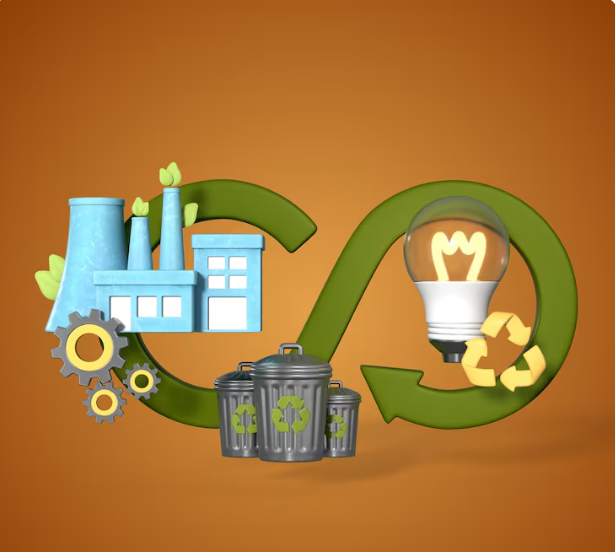
In today’s competitive business environment, companies are constantly searching for ways to reduce operational costs, improve efficiency, and build sustainable business models. One of the most promising approaches is the circular economy, a system designed to minimize waste while maximizing the value of existing resources.
Traditional supply chains generally follow a linear model: raw materials are extracted, products are manufactured, consumers purchase them, and eventually, those products are discarded. Although this system has supported industrial growth for decades, it often creates unnecessary waste, increases production expenses, and places pressure on natural resources.
The circular economy offers a different approach. Instead of treating waste as the final stage of production, businesses can transform unused materials, returned products, and manufacturing byproducts into valuable resources.
By adopting circular supply chain strategies, organizations can create new revenue opportunities, reduce material costs, and improve long-term operational resilience.
Understanding the Circular Economy in Supply Chains
A circular economy is an economic system that focuses on keeping products, materials, and resources in use for as long as possible. It encourages businesses to rethink how products are designed, manufactured, distributed, consumed, and recovered.
Unlike traditional supply chains that depend heavily on continuous resource extraction, circular supply chains prioritize resource efficiency and material recovery.
The core principles of a circular economy include:
- Reduce: Minimize unnecessary material consumption and waste generation.
- Reuse: Extend the useful life of products, packaging, and components.
- Repair: Restore damaged products instead of immediately replacing them.
- Refurbish: Upgrade used products so they can return to the market.
- Recycle: Convert discarded materials into resources for future production.
- Recover: Extract remaining value from materials that cannot be reused directly.
These principles help companies reduce dependence on virgin raw materials while creating additional economic value throughout the supply chain.
Identifying Hidden Value in Supply Chain Waste
Many companies underestimate the financial potential of waste generated during their daily operations. Manufacturing scraps, damaged packaging, returned merchandise, excess inventory, and obsolete equipment are often considered unavoidable expenses.
However, these materials can become valuable assets when managed strategically.
Manufacturing Byproducts
Industrial production frequently generates leftover metals, plastics, wood, textiles, and other materials.
Instead of sending these byproducts to disposal facilities, businesses can sell them to recycling companies or incorporate them into new products.
For example, a furniture manufacturer may transform leftover wood into decorative accessories, small household items, or composite materials.
This approach reduces disposal costs while generating additional revenue.
Excess Inventory
Unsold products can create financial pressure by occupying warehouse space and tying up working capital.
Circular supply chain practices encourage businesses to explore alternative distribution channels, refurbishment opportunities, and resale markets.
Companies can recover some of their investment by offering discounted products, selling through secondary marketplaces, or redistributing usable inventory.
Packaging Waste
Packaging represents another significant opportunity for circular innovation.
Reusable shipping containers, returnable pallets, and recyclable packaging materials can reduce purchasing costs over time.
Businesses that establish packaging recovery programs may also reduce the volume of single-use materials entering their supply chains.
How Circular Economy Strategies Generate Profit
The transition toward a circular economy is not only an environmental initiative. It can also become a practical business strategy for improving profitability.
1. Reducing Raw Material Costs
Raw materials account for a substantial portion of production expenses in many industries.
By recovering usable materials from manufacturing processes or returned products, companies can reduce their dependence on newly purchased resources.
For example, manufacturers that successfully incorporate recycled metals or plastics into production may lower material expenses when recovery and processing costs are competitive.
2. Creating New Revenue Streams
Circular business models allow organizations to generate income from resources that previously had little or no commercial value.
Companies can introduce refurbished product lines, sell recovered materials, offer repair services, or establish product leasing programs.
These activities can create additional revenue without requiring businesses to manufacture entirely new products.
3. Lowering Waste Management Expenses
Waste transportation, treatment, and disposal can become expensive, particularly for large manufacturing operations.
Reducing the amount of material sent to disposal facilities can lower these costs.
Businesses may also benefit from improved waste segregation, more efficient collection systems, and partnerships with specialized recovery companies.
4. Improving Customer Relationships
Consumers and business buyers increasingly consider durability, repairability, and environmental responsibility when evaluating products.
Companies that offer repair programs, reusable packaging, or product take-back services can demonstrate a commitment to resource efficiency.
These initiatives may strengthen customer loyalty while creating opportunities for repeat purchases and long-term service relationships.
The Role of Technology in Circular Supply Chains
Technology plays an important role in helping businesses identify waste, monitor resources, and improve material recovery.
Digital systems can provide greater visibility into supply chain operations, making it easier to detect inefficiencies and uncover opportunities for circular innovation.
Artificial Intelligence and Predictive Analytics
Artificial intelligence can analyze production data, demand patterns, and inventory movements to identify potential sources of waste.
Predictive analytics can also help businesses forecast demand more accurately, reducing overproduction and unnecessary inventory accumulation.
Manufacturers may use AI-powered systems to improve material utilization and identify opportunities to reuse production scraps.
Internet of Things (IoT)
IoT sensors allow companies to monitor equipment performance, product conditions, and resource consumption.
For example, connected devices can track machinery health and identify maintenance needs before equipment failures occur.
Extending equipment life through preventive maintenance reduces replacement costs and minimizes discarded components.
Digital Product Passports
Digital product passports are emerging as a tool for improving material traceability and product transparency.
They can contain information about a product’s composition, repair instructions, component origins, and potential recycling methods.
Such information can help manufacturers, repair providers, and recyclers recover valuable materials more efficiently.
Blockchain and Supply Chain Transparency
Blockchain technology can support traceability by creating shared records of material transactions and product movements.
When implemented appropriately, these systems may help organizations verify material origins, document recycling activities, and improve coordination among supply chain partners.
However, businesses should evaluate whether blockchain offers advantages over simpler databases before investing in it.
Building a Circular Supply Chain Blueprint
Successful circular economy implementation requires more than introducing recycling programs. Businesses need a structured strategy that connects operational efficiency with financial performance.
CIRCULAR VALUE CREATION MODEL
1. Assess
Map waste and material flows
2. Redesign
Reduce waste at the source
3. Recover
Collect and sort usable resources
4. Reuse
Repair, refurbish, or recycle
Return recovered value to the supply chain
Step 1: Conduct a Waste Audit
The first step is understanding where waste occurs throughout the supply chain.
Businesses should examine raw material purchasing, manufacturing processes, warehouse operations, transportation, packaging, and product returns.
A detailed waste audit can identify materials with recovery potential and reveal areas where unnecessary spending occurs.
Step 2: Redesign Products and Processes
Circularity begins with thoughtful product design.
Products that are durable, modular, repairable, and easy to disassemble are often better suited for reuse and material recovery.
Businesses should also evaluate manufacturing processes to minimize cutting losses, excess packaging, and unnecessary material consumption.
Step 3: Establish Reverse Logistics
Traditional logistics focuses on delivering products from manufacturers to consumers.
Reverse logistics manages the movement of products and materials back through the supply chain.
This process may include customer returns, repair collection, packaging recovery, and recycling programs.
Efficient reverse logistics systems help organizations recover products before their remaining value is lost.
Step 4: Develop Strategic Partnerships
Not every company has the equipment or expertise required to recycle complex materials.
Partnerships with recycling facilities, refurbishing specialists, logistics providers, and material recovery companies can make circular operations more practical.
Collaboration also allows businesses to develop industrial relationships where one organization’s byproducts become another company’s production inputs.
Step 5: Measure Financial and Environmental Performance
Circular economy programs should be evaluated using measurable performance indicators.
Important metrics include waste diversion rates, recovered material value, raw material savings, product return rates, repair costs, and revenue from refurbished products.
Tracking these indicators helps businesses determine whether circular initiatives are delivering sustainable financial benefits.
Circular Economy Opportunities Across Industries
Different industries can benefit from circular supply chains in unique ways.
Manufacturing
Manufacturing companies can recover production scraps, refurbish machinery, reuse industrial components, and improve material efficiency.
Closed-loop production systems may help reduce waste while increasing the useful life of valuable resources.
Retail and E-Commerce
Retailers can introduce resale platforms, reusable delivery packaging, and product take-back programs.
Returned items that remain functional can be inspected, repaired, and sold through secondary markets.
Automotive
Automotive manufacturers can recover metals, remanufacture engines and other components, and develop systems for processing used batteries.
These activities can reduce demand for certain virgin materials while creating opportunities in repair and remanufacturing.
Food and Agriculture
Food supply chains can reduce losses through better storage, improved demand forecasting, and more efficient distribution.
Suitable food byproducts may be used for animal feed, compost, bio-based materials, or energy production, subject to applicable safety and regulatory requirements.
Fashion and Textiles
Fashion businesses can develop clothing repair services, resale platforms, textile collection programs, and products made from recovered fibers.
Designing garments for durability and recyclability can also reduce resource consumption over the product lifecycle.
Overcoming Challenges in Circular Economy Implementation
Despite its potential advantages, transitioning to a circular supply chain can present several challenges.
Initial investment costs: Businesses may need new processing equipment, collection infrastructure, software, and employee training. These investments should be evaluated against expected savings and revenue.
Complex logistics: Collecting returned products and used materials can be expensive, especially when recovery volumes are small or geographically dispersed.
Material quality concerns: Recovered materials may require cleaning, sorting, testing, or additional processing before they can be reused safely.
Supplier coordination: Circular systems depend on cooperation between manufacturers, distributors, customers, recyclers, and logistics partners.
Market uncertainty: Demand and prices for recovered materials can fluctuate, affecting the profitability of recycling and refurbishment programs.
Organizations can address these challenges by starting with small pilot projects, establishing reliable partnerships, and expanding successful initiatives gradually.
Measuring the Profitability of Circular Initiatives
A circular economy project should deliver measurable business value rather than relying solely on environmental promises.
Consider a hypothetical manufacturing company that generates 100 tonnes of reusable material waste annually.
Suppose the company introduces a recovery system with the following financial results:
| Financial indicator | Annual amount |
|---|---|
| Revenue from recovered materials | $60,000 |
| Savings on raw material purchases | $35,000 |
| Reduced waste disposal expenses | $15,000 |
| Collection and processing costs | -$45,000 |
| Net annual operating benefit | $65,000 |
These illustrative figures show how material recovery can create value through multiple financial channels.
If the initial investment were $130,000 and annual benefits remained consistent, the simple payback period would be approximately two years.
Actual profitability depends on recovery efficiency, market prices, transportation expenses, material quality, capital costs, and operational complexity.
Companies should also avoid double-counting recovered material value when the same material is used internally rather than sold.
The Future of Circular Supply Chain Management
As businesses face resource constraints, fluctuating material prices, and growing expectations for responsible production, circular economy strategies are likely to become increasingly important.
Future supply chains may rely more heavily on automated sorting technologies, advanced material recovery systems, predictive maintenance, and product designs that support multiple lifecycles.
Business models based on leasing, refurbishment, and product-as-a-service arrangements may also become more common in industries where manufacturers can retain ownership of valuable products.
At the same time, better collaboration between suppliers, manufacturers, customers, and recovery partners can help create more efficient networks for circulating materials.
Companies that successfully integrate circularity into their core operations may gain advantages through reduced resource exposure, diversified revenue, and improved operational flexibility.
Conclusion
The circular economy represents an opportunity to rethink how businesses manage materials, products, and resources throughout their supply chains.
Instead of viewing waste as an unavoidable expense, organizations can identify opportunities to recover value through reuse, repair, refurbishment, recycling, and more efficient product design.
From reducing raw material purchases to developing new revenue streams, circular supply chain practices can support both environmental objectives and financial performance.
However, achieving these benefits requires careful planning, measurable goals, technological support, and effective collaboration across the supply chain.
The future of profitable supply chain management is not simply about producing more with fewer resources. It is about keeping existing resources valuable for longer.
Businesses that embrace this principle can turn supply chain waste into a strategic asset while building more resilient and resource-efficient operations.
Read More : Funny Pirate Ship Names: 750 Clever, Hilarious & Creative Ideas