
Introduction
Video games have evolved from simple, fixed environments into vast digital universes filled with exploration, discovery, and interactive experiences. One of the most exciting innovations driving this transformation is procedural world generation. Rather than manually designing every landscape, building, or environment, game developers can use algorithms to create complex virtual worlds automatically.
Procedural generation is changing how games are developed, played, and experienced. It allows developers to build enormous environments, introduce unexpected challenges, and offer unique adventures to different players. From randomly generated dungeons to entire galaxies filled with planets, algorithmic systems are expanding the possibilities of modern game design.
What Is Procedural World Generation?
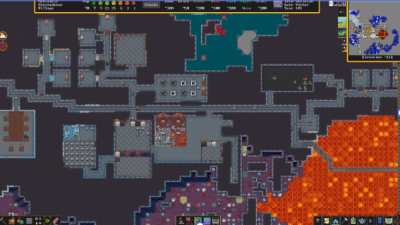
Procedural world generation is a game development technique that uses mathematical algorithms and predefined rules to create digital environments. Instead of artists manually placing every mountain, forest, river, or structure, developers design systems that generate these elements according to specific parameters.
These systems can produce landscapes, weather patterns, caves, cities, vegetation, and even mission layouts. The results may vary depending on the algorithms, random seeds, and design rules used.
For example, a procedural generation system might create a mountainous region with rivers flowing toward lower elevations, forests growing in suitable climates, and settlements appearing near accessible resources.
This approach combines mathematical logic with creative design, allowing virtual environments to feel expansive and unpredictable while maintaining a consistent visual identity.
How Algorithms Build Virtual Worlds
Procedural generation depends on several computational techniques that work together to create believable environments.
1. Random Seeds and Controlled Variation
Many procedural systems begin with a seed, which is a numerical value used to initialize the generation process. The same seed and settings can produce the same world, while changing the seed can generate a different environment.
This allows developers to create countless variations without manually designing each one.
2. Noise Functions and Terrain Creation
Noise algorithms, such as Perlin noise and Simplex noise, help generate natural-looking variations in landscapes. Developers use these techniques to create mountains, valleys, hills, and other terrain features.
Rather than relying on completely random shapes, noise functions produce gradual transitions that resemble patterns found in nature.
3. Rule-Based Environmental Design
Procedural systems often follow carefully designed rules. For example, deserts may appear in dry regions, snowy mountains at higher elevations, and forests in areas with favorable temperatures and rainfall.
These rules help maintain environmental consistency while still allowing variation.
4. Automated Placement of Objects
Algorithms can also determine where buildings, trees, rocks, roads, and other objects should appear. Placement systems may consider terrain conditions, distance requirements, accessibility, and environmental relationships.
This reduces repetitive development work and helps populate larger environments.
Why Procedural Generation Is Transforming Game Design
Creating Expansive Game Worlds
One of the greatest advantages of procedural generation is its ability to create environments much larger than developers could reasonably build entirely by hand.
Games can feature extensive continents, underground systems, distant planets, and interconnected regions without requiring artists to design every individual location.
No Man’s Sky is a well-known example of this approach, using procedural systems to generate an enormous universe with varied planetary environments.
Large-scale generation makes exploration a central part of gameplay by giving players unfamiliar locations to discover.
Increasing Replayability
Traditional games often feature predetermined environments that remain largely unchanged between playthroughs. Procedural generation introduces variation by changing level layouts, enemy positions, environmental features, and available resources.
This can make repeated playthroughs feel different.
For example, a dungeon exploration game might generate a new arrangement of rooms, traps, and rewards whenever the player begins another adventure. Even experienced players must adapt to unfamiliar situations.
Games such as Hades and Spelunky demonstrate how varied level configurations can support engaging replay experiences.
Reducing Repetitive Development Work
Creating a massive virtual world manually requires significant time and resources. Procedural tools help developers automate repetitive tasks such as terrain construction, vegetation placement, and environmental variation.
This does not eliminate the need for artists and designers. Instead, it allows them to focus on important locations, visual direction, storytelling, and gameplay mechanics.
Smaller development teams can also use procedural systems to create experiences that would otherwise demand considerably larger production budgets.
Procedural Generation and Player Freedom
Procedural worlds encourage exploration because players cannot always predict what lies beyond the next mountain or inside the next cave.
In sandbox games, this unpredictability supports experimentation and independent decision-making.
Minecraft demonstrates how procedurally generated landscapes can become the foundation for player creativity. Its worlds contain varied terrain, underground environments, resources, and structures that encourage building, survival, and exploration.
Players are not simply following a predetermined path. They can shape their surroundings and develop their own objectives.
This freedom helps create personal experiences and stories that emerge naturally through gameplay.
The Role of Artificial Intelligence in Procedural Design
Artificial intelligence is introducing additional possibilities for procedural content generation.
Traditional procedural systems rely primarily on predefined rules and mathematical processes. AI-assisted tools can help developers generate, evaluate, or refine certain types of content, potentially making automated design more responsive and varied.
AI systems may support several areas of game development, including environmental layout suggestions, dialogue variation, character behavior, and mission concepts.
For example, an AI-assisted system could help select mission elements based on a player’s progress, while procedural rules ensure that objectives remain technically possible within the generated environment.
However, AI-generated content requires careful testing. Automatically produced missions, dialogue, and environments can become inconsistent, repetitive, or disconnected from the intended game experience.
The most effective approaches generally combine automated generation with human creative direction.
Challenges of Algorithmically Generated Worlds
Although procedural generation offers major benefits, it also creates important design challenges.
Maintaining Quality and Meaningful Detail
Large environments do not automatically create engaging experiences. A world may contain thousands of locations but still feel empty if those locations lack memorable activities or meaningful differences.
Developers must balance environmental scale with the quality of exploration and interaction.
Avoiding Repetitive Patterns
Procedural systems can unintentionally produce similar landscapes, buildings, and challenges. Players may begin recognizing repeated structures even when individual environments are technically different.
To address this issue, developers introduce additional generation rules, environmental themes, handcrafted features, and carefully designed variations.
Ensuring Gameplay Balance
Randomly generated environments can create unexpected difficulty problems. Important resources might appear too far away, enemies could spawn in unfair locations, or generated paths might become inaccessible.
Developers use validation systems and testing tools to identify these problems before they affect gameplay.
Balancing Randomness With Storytelling
Narrative-driven games often depend on carefully timed events, character interactions, and specific locations.
Completely unpredictable environments can make these experiences difficult to coordinate.
Hybrid development approaches offer a practical solution by combining handcrafted narrative elements with procedurally generated surroundings.
Handcrafted Worlds vs. Procedural Worlds
Both handcrafted and procedural environments have advantages, and neither approach is automatically better.
Handcrafted worlds give designers precise control over visual composition, storytelling, environmental detail, and player progression. They are particularly effective when every location needs a carefully planned purpose.
Procedural worlds emphasize variation, scale, replayability, and unexpected discovery. They are useful when exploration or repeated gameplay forms an important part of the experience.
Many modern games combine both approaches. Developers may manually create important cities, missions, and landmarks while using procedural systems to generate surrounding terrain or secondary locations.
This combination allows games to benefit from automation without sacrificing creative direction.
The Future of Procedural Game Design
As game development technology continues to improve, procedural generation is likely to become more sophisticated.
Future systems may support more convincing ecosystems, settlements that develop according to simulated rules, and environments that respond more extensively to player decisions.
Developers may also create worlds where environmental changes influence available resources, wildlife behavior, transportation routes, and settlement growth.
Cloud computing and improved development tools could support larger simulations, although practical limits such as processing costs, memory requirements, and gameplay performance will remain important.
AI-assisted procedural tools may also help smaller studios experiment with more ambitious projects. However, successful games will still depend on thoughtful design, compelling mechanics, and meaningful player experiences.
The future is unlikely to involve replacing human designers with algorithms. Instead, procedural technology will increasingly serve as a creative partner that helps developers explore possibilities that would be difficult to achieve through manual production alone.
Conclusion
Procedural world generation is reshaping game design by allowing developers to create expansive, varied, and interactive environments through algorithms. It offers opportunities for greater replayability, more efficient development, and new forms of player-driven exploration.
At the same time, procedural systems require careful planning to avoid repetitive content, inconsistent quality, and unbalanced gameplay.
The most promising direction combines algorithmic generation with human imagination. By using technology to handle complexity while preserving artistic intention, developers can create virtual worlds that feel both unpredictable and meaningful.
As procedural systems continue to evolve, they will play an increasingly important role in shaping how digital worlds are built and how players experience them.
Read More : Funny Game Usernames: Hilarious & Totally Ridiculous Ideas