
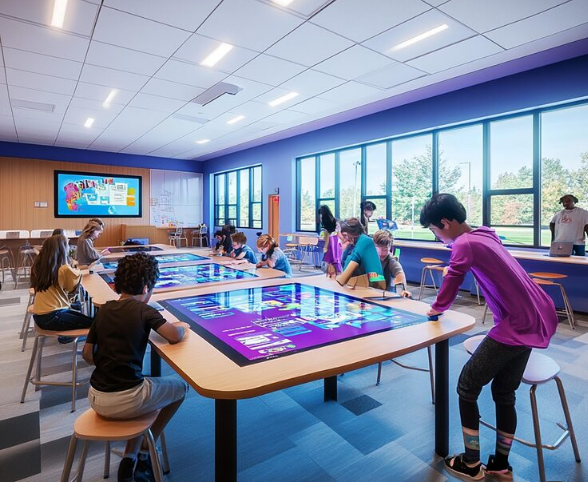
Education is evolving beyond traditional lectures, textbooks, and written examinations. As educators search for more effective ways to engage students, gamified learning has emerged as an innovative approach to classroom instruction. Among its most promising methods is quest-based learning, which transforms educational activities into interactive challenges, missions, and rewarding experiences.
By combining academic objectives with elements commonly found in games, quest-based learning encourages students to participate actively, solve problems, and develop a deeper understanding of complex subjects. Instead of simply memorizing information for examinations, learners explore concepts through meaningful activities that can improve long-term knowledge retention.
Understanding Quest-Based Learning in Modern Education
Quest-based learning is an educational strategy that organizes lessons around missions, challenges, and achievable goals. Students complete individual tasks or interconnected activities to progress through a structured learning journey.
Unlike conventional classroom instruction, where everyone typically follows the same sequence of lessons, quest-based learning can offer students greater flexibility in choosing activities and demonstrating their understanding.
For example, a history teacher might design a quest in which students investigate an ancient civilization, analyze historical evidence, and present their discoveries. Completing each mission unlocks another activity, encouraging continuous participation.
This approach introduces several game-inspired elements, including:
- Missions and challenges: Students complete purposeful tasks connected to educational objectives.
- Points and achievements: Learners receive recognition for completing activities and demonstrating progress.
- Levels and progression: Increasingly complex assignments help students build knowledge gradually.
- Interactive storytelling: Lessons incorporate narratives that make academic concepts more engaging.
- Feedback and rewards: Regular feedback allows students to recognize improvements and identify areas requiring additional attention.
These elements create a learning environment where academic progress feels rewarding rather than repetitive.
Why Traditional Learning Methods Sometimes Struggle With Retention
Traditional teaching methods remain valuable, particularly when educators explain difficult concepts or introduce unfamiliar subjects. However, passive learning experiences may limit opportunities for students to apply and reinforce information.
Listening to lectures or reading textbooks without meaningful interaction can make it difficult for some learners to retain information over extended periods.
Knowledge retention generally improves when students engage actively with educational material, revisit concepts, and connect new information to existing knowledge.
Quest-based learning incorporates these principles by requiring students to interact with lessons instead of simply observing them.
Rather than remembering facts only for a test, learners repeatedly apply their understanding through challenges, discussions, experiments, and problem-solving activities.
How Quest-Based Learning Can Improve Knowledge Retention
1. Encouraging Active Participation
Active engagement is one of the most valuable aspects of quest-based education. Students become participants in the learning process rather than passive recipients of information.
When learners solve puzzles, complete research missions, or collaborate on challenges, they must recall relevant concepts and use them to make decisions.
For example, a mathematics quest might require students to calculate distances, manage a fictional budget, or solve equations to complete an exploration mission.
These activities encourage students to connect mathematical principles with practical situations, supporting a stronger understanding of the subject.
2. Using Repetition Without Creating Monotony
Repetition supports memory development, but repeatedly completing identical exercises can become uninteresting.
Quest-based learning introduces variation while reinforcing important concepts.
Students might encounter similar mathematical formulas or scientific principles across different missions, each presenting a new scenario.
This repeated exposure helps learners practice retrieving information while maintaining a sense of novelty.
When challenges are spaced appropriately over time, they may also support longer-lasting retention.
3. Connecting Learning With Meaningful Experiences
Information becomes easier to understand when students can connect it to familiar situations or meaningful experiences.
Quest-based learning frequently uses storytelling, simulations, and realistic challenges to create these connections.
A science lesson about environmental conservation could involve students completing a mission to protect a fictional ecosystem.
Throughout the challenge, students might investigate pollution, evaluate sustainability strategies, and recommend solutions.
The experience helps connect abstract scientific concepts with recognizable environmental problems, making the material more memorable.
4. Providing Immediate and Constructive Feedback
Feedback plays an essential role in effective learning.
In conventional classroom settings, students may wait several days to receive evaluations of assignments or examinations.
Quest-based systems can provide faster feedback through quizzes, automated assessments, teacher comments, and progress indicators.
When students identify mistakes immediately, they have an opportunity to correct misunderstandings before moving forward.
Effective feedback also helps students recognize the relationship between effort, learning strategies, and improvement.
5. Supporting Learning Through Progressive Challenges
Educational content becomes overwhelming when students face advanced concepts before developing foundational knowledge.
Quest-based instruction addresses this problem by organizing activities into manageable stages.
Students begin with introductory missions and gradually move toward more demanding tasks.
For example, a language-learning quest might progress from identifying vocabulary to constructing sentences and eventually participating in realistic conversations.
This structured progression supports confidence while helping learners strengthen previously acquired knowledge.
The Role of Motivation in Gamified Classrooms
Motivation strongly influences how students approach educational activities.
Quest-based learning can encourage motivation by giving learners clear goals, visible progress, and opportunities to make choices.
Completing a difficult challenge may produce a sense of accomplishment, encouraging students to continue learning.
However, successful gamification involves more than awarding points or creating leaderboards.
Students are more likely to remain engaged when activities provide meaningful learning experiences, manageable challenges, and opportunities for personal growth.
Educators should therefore balance external rewards with intrinsic motivation, ensuring that curiosity and understanding remain central to classroom activities.
Making Personalized Learning More Accessible
Every student learns at a different pace and brings unique strengths to the classroom.
Quest-based learning allows educators to design multiple pathways toward the same academic objective.
Some students may benefit from visual activities, while others prefer research, discussions, or hands-on experiments.
For example, students studying renewable energy could choose between creating a presentation, building a simple model, or analyzing energy consumption data.
Although the activities differ, each pathway can assess the same essential learning outcomes.
This flexibility allows students to demonstrate their understanding while receiving appropriate support.
Personalized quests can also help educators identify students who need additional practice and those who are ready for advanced challenges.
Collaboration and Social Learning Through Team Quests
Quest-based learning does not have to focus exclusively on individual achievement.
Collaborative missions encourage students to exchange ideas, communicate effectively, and solve problems together.
A geography class might organize a team quest in which students plan a sustainable city. Different team members could investigate transportation, energy consumption, housing, and environmental protection.
Completing the mission requires students to combine their findings into a practical proposal.
Such experiences can strengthen teamwork, leadership, and communication skills while encouraging students to explain academic concepts to one another.
Peer discussions can also reveal misunderstandings and reinforce knowledge through explanation.
How Technology Supports Quest-Based Learning
Digital technology has made it easier for educators to introduce interactive quests into classroom activities.
Learning management systems, educational applications, and interactive platforms can help teachers organize assignments, monitor progress, and deliver feedback.
Digital tools may also incorporate multimedia content, interactive simulations, virtual environments, and progress dashboards.
For example, a biology teacher could develop an interactive mission that asks students to explore the human body, identify organs, and explain their functions.
Students could receive new challenges after demonstrating an understanding of earlier material.
However, technology is not essential for successful quest-based learning. Teachers can create meaningful experiences using printed mission cards, classroom stations, physical puzzles, and group activities.
The effectiveness of the approach depends more on instructional design than on sophisticated technology.
Practical Examples of Quest-Based Learning Across Subjects
Quest-based learning can be adapted to different academic disciplines and educational levels.
| Subject | Example quest | Learning objective |
|---|---|---|
| Mathematics | Solve clues to unlock a fictional treasure | Apply calculations and logical reasoning |
| Science | Investigate an environmental mystery | Understand scientific concepts and evidence |
| History | Reconstruct events from historical documents | Develop research and analytical skills |
| English | Complete a storytelling adventure | Improve reading, vocabulary, and writing |
| Geography | Design a sustainable community | Apply geographical and environmental knowledge |
| Computer Science | Debug a fictional digital system | Strengthen programming and problem-solving skills |
These examples demonstrate how academic objectives can be incorporated into engaging activities without sacrificing educational substance.
Challenges Educators Should Consider
Despite its potential benefits, quest-based learning presents several challenges.
Designing meaningful missions requires planning, creativity, and an understanding of learning objectives.
Teachers must ensure that game mechanics reinforce academic knowledge rather than distract students from the material.
Another concern involves competition. Excessive emphasis on points and rankings may discourage students who progress more slowly.
Some learners may also become focused on collecting rewards instead of understanding the concepts behind each assignment.
Accessibility is equally important. Activities should accommodate students with different abilities, learning needs, and levels of access to technology.
Educators can address these challenges by creating inclusive learning pathways, emphasizing individual improvement, and using clear assessment criteria.
Best Practices for Introducing Quest-Based Learning
Successful implementation begins with identifying the knowledge and skills students should develop.
Teachers should then build challenges that directly support those objectives.
Starting with a small classroom quest can help educators evaluate student responses before introducing more complex learning systems.
It is also important to combine engaging activities with established instructional practices, including retrieval practice, spaced repetition, discussion, and formative assessment.
Rather than relying exclusively on game rewards, educators should emphasize meaningful accomplishments and encourage students to reflect on their progress.
Regular assessment remains necessary to determine whether students are genuinely retaining information.
Short quizzes, practical demonstrations, and delayed assessments can provide valuable evidence of learning beyond immediate classroom engagement.
The Future of Gamified Education
As digital learning environments continue to develop, quest-based education may become increasingly adaptable and personalized.
Artificial intelligence could help educators generate differentiated challenges, identify knowledge gaps, and recommend appropriate learning activities.
Virtual and augmented reality may also introduce immersive educational missions, allowing students to explore historical environments, investigate scientific processes, or practice technical skills through simulations.
However, these innovations should complement effective teaching rather than replace the guidance of educators.
The long-term value of quest-based learning will depend on whether it produces measurable improvements in understanding, retention, and practical knowledge.
Although research on gamification has reported promising outcomes, results vary depending on instructional design, student characteristics, and implementation. Quest-based learning should therefore be evaluated as an educational strategy rather than treated as a guaranteed solution.
Conclusion
Gamified classrooms are changing how educators approach student participation and knowledge development. By transforming lessons into structured missions, quest-based learning creates opportunities for active engagement, repeated practice, collaboration, and personalized instruction.
Its greatest strength lies in helping students move beyond passive memorization toward meaningful application of academic concepts.
When carefully designed around educational objectives, quest-based learning can support stronger understanding and more durable knowledge retention while making classroom experiences more enjoyable.
As schools continue exploring innovative teaching methods, quest-based learning offers a promising way to connect motivation, creativity, and academic achievement.
Read More : Micro-Credentials vs. Traditional Degrees: The New Hiring Benchmark