Introduction
The automotive industry is undergoing a remarkable transformation as manufacturers explore innovative ways to make vehicles faster, more efficient, and environmentally friendly. While electric powertrains, advanced batteries, and intelligent driving technologies receive considerable attention, another important development is quietly reshaping the appearance of modern cars: aerodynamics.
Have you noticed how many futuristic vehicles feature smooth curves, rounded front ends, and gently tapered rear sections? These design choices are not simply about creating an attractive appearance. They are closely connected to the science of airflow and the effort to reduce aerodynamic resistance.
One of nature’s most recognizable shapes, the water drop, provides a useful starting point for understanding streamlined vehicle design. Although a falling raindrop is not actually shaped like the familiar pointed teardrop, the streamlined teardrop profile has become an important inspiration in automotive engineering.
Understanding why tomorrow’s cars increasingly resemble water drops reveals how scientific principles, technological advances, and environmental priorities are influencing the future of transportation.
Understanding Vehicle Aerodynamics
Vehicle aerodynamics is the study of how air moves around a vehicle while it travels. As a car moves forward, it must push through the surrounding atmosphere. This interaction creates forces that influence energy consumption, stability, noise, and overall performance.
One of the most important forces is aerodynamic drag, which acts against a vehicle’s forward motion.
The amount of drag depends on several factors, including vehicle speed, frontal area, air density, and the shape of the body.
Engineers often describe aerodynamic efficiency using the drag coefficient, commonly represented as Cd. A lower drag coefficient generally indicates that a vehicle’s shape moves through the air more efficiently, although overall drag also depends on frontal area.
At higher speeds, aerodynamic resistance becomes increasingly significant. Because drag force rises approximately with the square of vehicle speed, the power required to overcome it increases approximately with the cube of speed.
This means that improving aerodynamics can produce meaningful energy savings, particularly during highway driving.
Why the Waterdrop Shape Matters
The streamlined teardrop shape is associated with efficient airflow because it combines a rounded front with a gradually narrowing rear.
When air encounters a smoothly rounded front surface, it can flow around the object without abrupt changes in direction. As the body narrows toward the back, a gradual taper helps the airflow remain attached for longer.
This reduces flow separation and the size of the turbulent wake behind the object.
Large turbulent wakes create pressure differences that increase aerodynamic drag. By minimizing these disturbances, streamlined designs can move through the air with less resistance.
However, an ideal aerodynamic body is not always practical for passenger vehicles. Cars require sufficient cabin space, passenger visibility, cargo capacity, and structural protection.
Consequently, automotive designers adapt the principles of streamlined forms rather than copying a perfect teardrop shape.
How Modern Cars Are Becoming More Aerodynamic
1. Smooth and Rounded Front Designs
Traditional vehicles often featured upright grilles, prominent bumpers, and relatively flat front surfaces.
Modern aerodynamic designs increasingly incorporate rounded noses and smoothly integrated body panels.
These features help direct airflow around the vehicle while reducing unnecessary disturbances.
Electric vehicles have greater flexibility in this area because they typically do not require the same large front grille openings used by conventional combustion-engine vehicles.
Instead, engineers can create smoother front surfaces and manage cooling airflow through smaller, strategically positioned openings.
2. Sloping Rooflines and Tapered Rear Sections
The transition from a vehicle’s roof to its rear section plays a major role in aerodynamic performance.
Abrupt changes in body shape can cause air to separate from the surface, producing turbulence and increasing drag.
A gently sloping roofline allows airflow to follow the vehicle more smoothly.
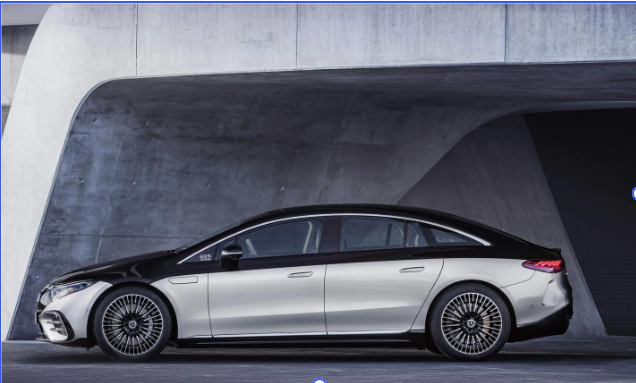
This explains why many modern electric sedans feature fastback silhouettes, where the roof gradually descends toward the rear.
However, the best rear shape depends on the complete vehicle design. A carefully engineered truncated tail can sometimes achieve excellent results without requiring a long, pointed rear section.
3. Flush Door Handles and Integrated Components
Small exterior details can significantly influence airflow.
Traditional protruding door handles, exposed mounting structures, and poorly integrated accessories may create localized turbulence.
To address this, manufacturers are introducing features such as flush-fitting door handles, streamlined side mirrors, integrated lighting, and smoother panel transitions.
While the improvement from each individual component may be modest, their combined effect can contribute to a more efficient vehicle.
4. Flat Underbody Panels
Aerodynamics involves more than the visible upper body of a car.
Air traveling underneath a vehicle can encounter suspension components, structural elements, and mechanical equipment that generate turbulence.
Modern vehicles increasingly use smooth underbody panels to manage this airflow.
Electric vehicle platforms can make such designs easier to implement because battery packs are frequently positioned beneath the passenger compartment.
A carefully engineered underbody can help reduce aerodynamic drag while contributing to predictable vehicle stability.
5. Aerodynamic Wheels and Air Curtains
Wheels are another significant source of aerodynamic disturbance.
As tires rotate, they interact with surrounding air and produce complicated flow patterns near the wheel arches.
Automakers address these challenges using aerodynamic wheel covers, carefully shaped wheel openings, and air curtains that guide airflow around the front wheels.
These solutions help manage turbulence without requiring major changes to the vehicle’s overall dimensions.
The Relationship Between Aerodynamics and Electric Vehicles
Aerodynamics has become especially important with the rapid expansion of electric mobility.
Unlike conventional vehicles, electric cars depend on stored battery energy to power their motors and supporting systems. Improving efficiency can therefore increase the distance traveled on a single charge.
At highway speeds, aerodynamic resistance represents a substantial portion of the energy required to move a vehicle.
A more streamlined body can help an electric vehicle maintain speed while consuming less energy.
This offers several potential advantages:
- Longer driving range: Reduced drag can allow vehicles to travel farther using the same battery capacity.
- Improved highway efficiency: Aerodynamic improvements become particularly valuable at sustained higher speeds.
- Potential battery savings: Higher efficiency may allow manufacturers to meet certain range targets with smaller battery packs.
- Reduced energy consumption: Vehicles that require less energy for transportation can lower operating costs.
Importantly, aerodynamics is only one part of overall vehicle efficiency. Battery technology, motor performance, vehicle weight, tires, temperature, and driving behavior also influence electric vehicle range.
Real-World Examples of Aerodynamic Vehicle Design
The EQS features a smooth, continuous roofline, rounded front section, and carefully integrated exterior components to reduce aerodynamic resistance.

Hyundai Ioniq 6
Its distinctive streamlined silhouette demonstrates how a tapered body and carefully shaped surfaces can contribute to aerodynamic efficiency.

Lucid Air
The Lucid Air combines a low nose, smooth roofline, and aerodynamic detailing to balance spaciousness with energy efficiency.
These vehicles illustrate how manufacturers are incorporating streamlined design principles without completely sacrificing comfort, practicality, or visual identity.
How Aerodynamics Improves Driving Performance
Although energy efficiency is a major advantage, aerodynamic design can also influence how a vehicle behaves on the road.
Better High-Speed Stability
Airflow around a vehicle produces aerodynamic forces that can affect stability.
Engineers carefully manage these forces to reduce unwanted lift and maintain predictable handling.
For performance vehicles, aerodynamic components may generate downforce, increasing tire loading at high speeds. However, additional downforce can also increase drag, requiring manufacturers to balance grip and efficiency.
Reduced Wind Noise
Wind noise becomes more noticeable as vehicle speed increases.
Airflow disturbances around side mirrors, windows, pillars, and door seals can create unwanted sound.
Smoother exterior surfaces and carefully designed transitions help reduce these disturbances, contributing to a quieter cabin.
This is particularly valuable in electric vehicles, where the absence of a conventional combustion engine can make wind and tire noise more noticeable.
Improved Energy Efficiency
Less aerodynamic drag means the powertrain requires less energy to maintain a given speed under otherwise similar conditions.
For electric vehicles, this may extend driving range. For combustion-powered vehicles, it may help reduce fuel consumption.
Both outcomes demonstrate why aerodynamics remains important regardless of propulsion technology.
The Role of Artificial Intelligence and Computer Simulation
Modern automotive aerodynamics relies heavily on advanced simulation and digital engineering tools.
Computational fluid dynamics, commonly called CFD, allows engineers to model how air flows around a digital vehicle design.
Instead of relying entirely on physical prototypes, manufacturers can explore different body shapes and compare their aerodynamic characteristics virtually.
These simulations help identify areas where airflow separates, turbulence develops, or pressure differences increase drag.
Artificial intelligence and machine learning can further support this process by analyzing simulation data, predicting performance trends, and helping engineers evaluate large numbers of design variations.
However, digital simulations do not entirely replace physical testing.
Wind tunnels and real-world driving evaluations remain essential for validating aerodynamic performance under different conditions.
By combining simulation, AI-assisted optimization, and physical testing, manufacturers can develop increasingly refined vehicle shapes.
Why Not Every Future Car Will Look Like a Water Drop
Despite the advantages of streamlined designs, aerodynamic efficiency is not the only factor determining a vehicle’s appearance.
Passenger comfort, cargo space, safety requirements, manufacturing costs, and consumer preferences also influence automotive design.
For example, a perfectly tapered vehicle might offer impressive aerodynamic performance but provide inadequate rear headroom or luggage capacity.
Similarly, SUVs and pickup trucks require different proportions from low-profile sedans.
Designers must therefore balance aerodynamic efficiency with practical requirements.
A vehicle with a slightly higher drag coefficient may still be more useful to certain drivers if it offers greater interior space or better versatility.
Furthermore, reducing the drag coefficient alone does not guarantee low total aerodynamic resistance. A large vehicle with a low drag coefficient may still experience substantial drag because of its greater frontal area.
The goal is not to make every vehicle identical but to apply aerodynamic principles intelligently to different vehicle categories.
The Future of Vehicle Aerodynamics
Automotive aerodynamics will continue evolving as manufacturers seek new ways to improve efficiency and performance.
Several developments could shape future designs.
Active aerodynamic systems may become more common, allowing vehicles to adjust shutters, spoilers, or other components depending on driving speed and cooling requirements.
More efficient underbody designs could improve airflow management while maintaining passenger space and structural protection.
Advanced materials and manufacturing techniques may help engineers create complex aerodynamic surfaces that were previously difficult or expensive to produce.
AI-assisted vehicle development could make it easier to optimize entire vehicle bodies while considering aerodynamic performance, safety, styling, and manufacturing constraints simultaneously.
Future vehicles may also incorporate more sophisticated thermal management systems that carefully balance cooling airflow with drag reduction.
Rather than becoming exact replicas of water drops, tomorrow’s cars are likely to adopt increasingly smooth, purposeful shapes influenced by the same principles that make streamlined forms efficient.
Environmental Benefits of Aerodynamic Innovation
Improved vehicle aerodynamics can contribute to more sustainable transportation.
When a vehicle experiences less drag, it generally consumes less energy at a given speed.
For conventional vehicles, this can help reduce fuel consumption and associated emissions.
For electric vehicles, improved efficiency can reduce electricity demand per kilometer traveled.
It may also support the development of vehicles that achieve acceptable range with smaller batteries, potentially reducing some material requirements and manufacturing impacts.
However, the total environmental benefit depends on multiple factors, including manufacturing methods, battery production, electricity sources, driving patterns, and vehicle lifespan.
Aerodynamics is therefore an important component of sustainable mobility rather than a complete solution by itself.
Conclusion
The growing resemblance between modern vehicles and streamlined waterdrop shapes reflects a deeper shift in automotive engineering.
Manufacturers are increasingly designing cars around the movement of air, recognizing that exterior shape can significantly influence efficiency, range, noise, and performance.
Smooth front sections, tapered rooflines, flat underbodies, and integrated components all contribute to reducing unnecessary aerodynamic resistance.
As electric mobility, artificial intelligence, and advanced engineering technologies continue developing, aerodynamics will remain central to vehicle innovation.
Tomorrow’s cars may not all share the same silhouette, but many will follow a common principle: achieving more efficient movement by working with airflow rather than fighting against it.
Ultimately, the future of automotive design is not simply about looking futuristic. It is about combining science, functionality, and intelligent engineering to create vehicles that travel farther, consume less energy, and deliver a more refined driving experience.
Read More : Restomodding: The Art of Injecting Modern Supercar Power into Vintage Bodies